The challenge
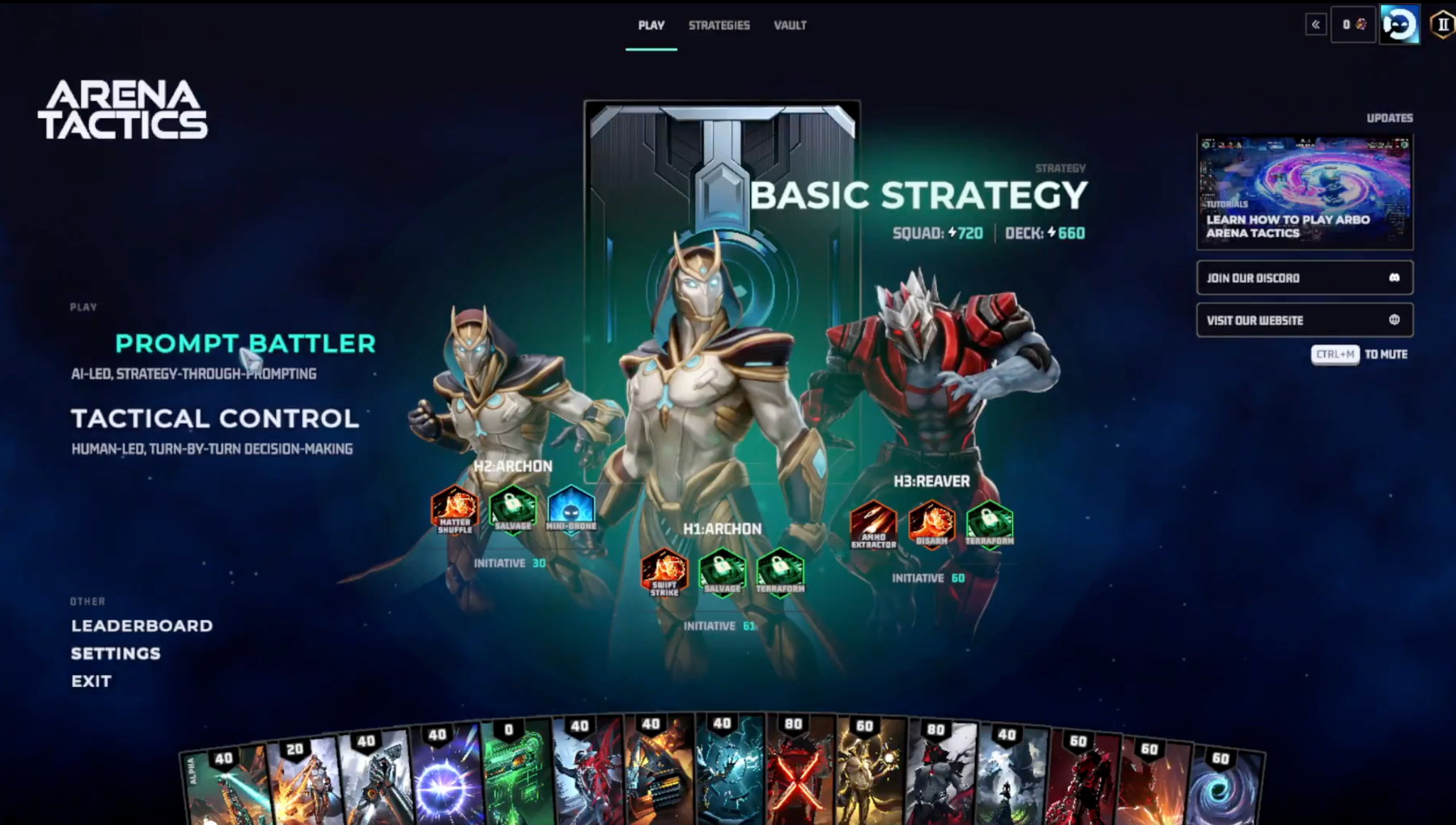
Arena Tactics combines cards, positioning, movement, terrain, status effects, unit abilities, and sequencing into a possibility space measured in septillions. That depth is the point. It is also the barrier.
Traditional controls ask a player to master the interface before they can express a strategy. A mobile port can make that worse: the screen gets smaller, but the decision tree does not.
The system
We built a multi-agent architecture that reads a command, inspects game state, develops a plan, translates it into atomic actions, validates every action against the game’s legal constraints, and repairs the plan when necessary.
That architecture supports a fully conversational mode, adaptive AI opponents, and intelligent co-play. Players can issue a complete tactical plan, give a short instruction, or let the system fill in the gaps while staying inside the rules.
The mobile move
Language control abstracted away the most interface-heavy parts of play. Instead of reproducing every desktop interaction on a small screen, the mobile experience could preserve the decision while compressing the execution. That made it possible to bring the game to mobile in one month.
The result
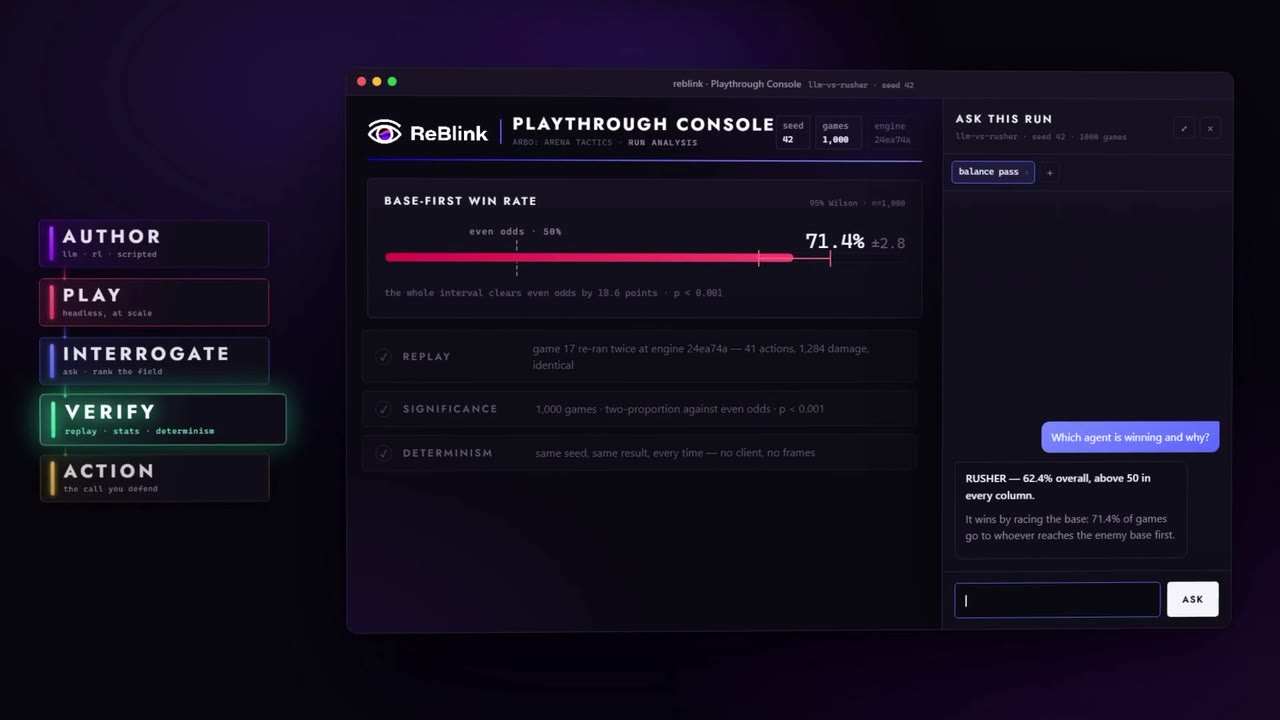
Arena Tactics became more than a game. It became a live research environment for agent evaluation, multimodal state understanding, spatial reasoning, model distillation, headless simulation, and the player-facing experiences now offered through Playable and Playthrough.